





Childhood Brain Cancer Research and Clinical Funding Program

To accelerate progress in childhood brain cancer research, SPARC gathers insight from experts across diagnostics, research, clinical trials, and rehabilitation and encourages collaboration. Partnering with philanthropists, SPARC helps to strategically deploy capital to propel scientific advancement and fast-track improved treatments and rehabilitative interventions.

Our Work

Childhood Brain Cancer: A Giving Smarter Guide

In 2022, SPARC assessed the state of the field and funding landscape to uncover where philanthropic funding could have the greatest impact in childhood brain cancer. These findings are detailed in the Giving Smarter Guide, a resource designed to help philanthropists make informed, high-impact contributions toward improving pediatric brain cancer research and care.

Partnership with an Anonymous Donor 

Since 2022, the SPARC team has partnered with an anonymous donor committed to transforming therapeutic options and care for pediatric patients with brain tumors. This collaboration invests transformational funding in leading institutions in the Washington, DC, area to drive progress and establish improved standards of care for the entire field.

Childhood Brain Cancer Communication and Collaboration

In addition to providing operational support and oversight for the anonymous donor’s investments, SPARC integrates into the pediatric brain cancer ecosystem through participation in scientific meetings, serving as a bridge between various stakeholders and facilitating collaborations.

As a member of the pediatric brain cancer ecosystem, the SPARC team advises the donor on investment strategy and offers subject matter expertise to support their efforts in accelerating progress and discovery in the field.

External Advisory Board

407x395 placeholder

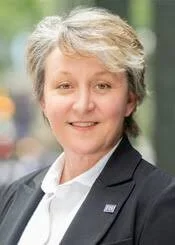
Robert Wechsler-Reya, PhD

External Advisory Board Chair, Professor of Neurological Sciences, Scientific Director of Brain Tumor Research, Herbert Irving Comprehensive Cancer Center, Columbia University

Robert Wechsler-Reya serves as co-director of the Pacific Pediatric Neuro-Oncology Consortium (PNOC)/Children’s Brain Tumor Network Medulloblastoma Working Group and has worked with PNOC investigators to develop clinical trials for patients with recurrent medulloblastoma and high-grade glioma.

407x395 placeholder

Saro Armenian, DO, MPH

Barron Hilton Chair in Pediatrics and the Director of the Division of Outcomes Research/Intervention in the Department of Population Sciences, City of Hope, Duarte

Dr. Armenian co-leads the City of Hope Cancer Control and Population Sciences Program and directs the Center for Survivorship and Outcomes in the Hematologic Malignancies Research Institute.

407x395 placeholder

Eric Bouffet, MD, FRCP(C)

Emeritus Professor of Pediatrics, University of Toronto

Dr. Bouffet is interested in novel treatments and clinical trials in children with brain tumors and has recently joined Saint Jude Global as a member of the Global Neuro-Oncology team to implement neuro-oncology programs in countries with limited resources.

407x395 placeholder

Heather Conklin, PhD

Department of Psychology and Biobehavioral Sciences and Chief of the Neuropsychology Division at St. Jude Children’s Research Hospital

Heather Conklin is interested in improving the specification of cognitive deficits following brain tumor treatment, delineating risk and resiliency factors for cognitive outcome, and identifying interventions that mitigate cognitive deficits.

407x395 placeholder

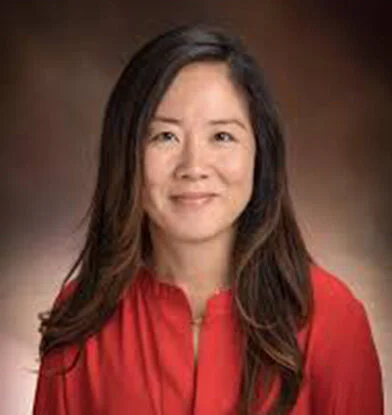
Mariella Gruber Filbin, MD, PhD

Pediatric Neuro-Oncologist and Principal Investigator, Dana-Farber Cancer Institute and Boston Children’s Hospital; Assistant Professor in Pediatrics, Harvard Medical School

Dr. Gruber Filbin focuses her research on identifying networks underlying tumor formation, with the goal of establishing new druggable targets for high-grade gliomas and malignant embryonal brain tumors and serves as the co-director of the Brain Tumor Center of Excellence at Dana-Farber Cancer Institute and Boston Children’s Hospital.

407x395 placeholder

Stephen Gottschalk, MD

Chair, Department of Bone Marrow Transplantation and Cellular Therapy, St. Jude Children’s Research Hospital

Dr. Gottschalk’s work is focused on developing cell-based immunotherapies for pediatric cancers and conducting investigator-initiated early-phase clinical studies with conventional and genetically modified immune cells.

407x395 placeholder

Amy B Heimberger, MD

Professor, Department of Neurosurgery, Northwestern University

Dr. Heimberger conducts research on the mechanisms of tumor-mediated immune suppression and acts as a principal investigator for immune therapy clinical trials for patients with brain cancer. Several trials arise from her own patients; she also advises companies on clinical trial designs.

407x395 placeholder

Tobey MacDonald, MD

Professor, Department of Pediatrics, Emory University School of Medicine; Director, Pediatric Neuro-Oncology Program, Aflac Cancer and Blood Disorders Center

Dr. MacDonald leads an active laboratory that focuses on preclinical drug development and the use of nanotechnology in patient care, as well as clinical trials for novel therapeutics for childhood brain tumors, several of which he developed from bench to bedside.

407x395 placeholder

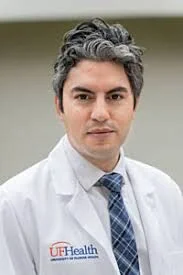
Elias Sayour, MD, PhD

Associate Professor of Neurosurgery and Pediatrics; Principal Investigator, RNA Engineering Laboratory, Preston A. Wells, Jr. Center for Brain Tumor Therapy and University of Florida (UF) Brain Tumor Immunotherapy Program; Co-leader, UF Health Cancer Center Cancer Therapeutics and Host Response, University of Florida

Dr. Sayour is developing new nanotech vaccines to reprogram the immune system against cancer cells and serves as Principal Investigator on first-in-human immunotherapy studies for children with aggressive brain cancers.

407x395 placeholder

Angela Waanders, MD, MPH

Section Head, Neuro-Oncology; Director, Precision Medicine Oncology; Executive Board Chair, Children’s Brain Tumor Tissue Consortium; Associate Professor of Pediatrics (Hematology, Oncology, and Stem Cell Transplantation), Northwestern University Feinberg School of Medicine

Dr. Waanders is developing research analytics methods for children with brain and spinal cord tumors and serves as the current Executive Board Co-chair for the Children’s Brain Tumor Network.

Awardees and Projects

Project

Child Mental Health and Behavioral Brain Tumor Lab

Karin Walsh, PsyD

Co-Investigator: Adelaide Robb, MD

Overview

This program establishes a robust neuro-oncology mental health program that will advance two goals: (1) to foster the best neurocognitive outcomes for patients by ensuring that a neuropsychologist screens every oncology patient and delivers appropriate and timely interventions, and (2) to drive advancements that provide immediate, specialized psychiatric care at every stage of the treatment journey.

Project

Comprehensive Cancer Wellness Program

Jennifer Levine, MD Cancer Survivorship Program

Overview

The Comprehensive Cancer Wellness Program provides critical support for clinical positions that will support pediatric neuro-oncology patients throughout the course of their lives, ensuring lifelong well-being during and following treatment. This funding also supports database development, data management, and clinical research coordination, as well as the resources to conduct survivorship research.

Project

Low-Intensity Focused Ultrasound Research Program

Roger Packer, MD Gilbert Family Neurofibromatosis Institute and the Brain Tumor Institute

Overview

This program includes a basic laboratory research effort to determine the optimal agents to deliver with focused ultrasound to enhance tumor kill. It also has a clinical program designed to expeditiously treat childhood brain tumors with this modality. The research program studies focused ultrasound’s ability to transiently open the blood-brain barrier for therapeutic delivery and uses it as a means to activate pro-drugs.

Project

Psychosocial Supports Program

Jeffrey Dome, MD, PhD Cancer and Blood Disorders Center

Overview

This program provides a diverse range of support programs for children and families in the pediatric oncology unit. This funding will support a robust psychosocial team to ensure long-term, uninterrupted services to patients at Children’s National Hospital. These services support children’s growth, development, and emotional well-being throughout their treatment journey and provide critical support to the whole family.

Project

Cellular Immunotherapy Program

Catherine Bollard, MBChB, MD Children’s National Research Institute, Center for Cancer and Immunology Research

Overview

This program enables Children’s National Hospital to dramatically scale its cancer research program for Cell Enhancement and Technologies for Immunotherapy to drive the development of novel therapies for children with brain tumors. The funding will support the IMPACT clinical trial, the B7H3 CAR T cell clinical trial, and a protocol for the manufacturing of clinical-grade vectors for gene-engineered cells for pediatric brain tumors.

Project

Rare Brain Tumor Program

Adriana Fonseca, MD Rare Brain Tumor Program

Overview

The Rare Brain Tumor Program leverages collaboration between various institutions worldwide to identify and collect biospecimens and match clinical and radiological data on ultra-rare childhood cancers. The funding for this program supports basic science efforts in laboratories at Children’s National—and other laboratories across the world—that will contribute to greater scientific understanding of rare pediatric brain tumors.

Project

Neurosurgery Innovation Program

Robert Keating, MD Neurosurgery

Overview

This program enables the Children’s National neurosurgery team to pursue multiple avenues to perform safer, more effective neurosurgery and develop new means to enhance drug/agent delivery, to transform neurosurgical aspects of pediatric neuro-oncology.

Project

Precision Medicine/Developmental Therapeutics Program

Muller Fabbri, MD, PhD Center for Cancer and Immunology Research

Overview

The goal of the developmental therapeutics program is to establish biology-informed therapies for personalized therapy of children across a spectrum of central nervous system cancers.

Project

Neuroscience Nursing Excellence Program

Linda Talley, MS, RN, NE-BC, FAAN

Overview

This program allows the addition of key nursing staff, including a nurse navigator, and training to facilitate continuity of care across the specialists required for comprehensive neuro-oncology care. The nursing fellowships program provides leadership and management of specialty fellowship training, including certification courses for direct care nurses, with an emphasis on neuro-oncology.

Publications

Peer-Reviewed Publications by Grantees

The T Cell Receptor Landscape of Childhood Brain Tumors

Raphael, Itay, Zujian Xiong, Chaim T. Sneiderman, et al. n.d.

“The T Cell Receptor Landscape of Childhood Brain Tumors.” Science Translational Medicine 17 (790): eadp0675. https://doi.org/10.1126/scitranslmed.adp0675.

Related Content

Insight
Sample Featured Image Alt

The Value of Collaboration in Rare Disease Research

Childhood brain cancers are among the rarest and most difficult to treat, but new models of collaboration are changing what’s possible. This article explores how philanthropy, advocacy, and cross-sector partnerships are breaking down barriers and accelerating progress toward better treatments.